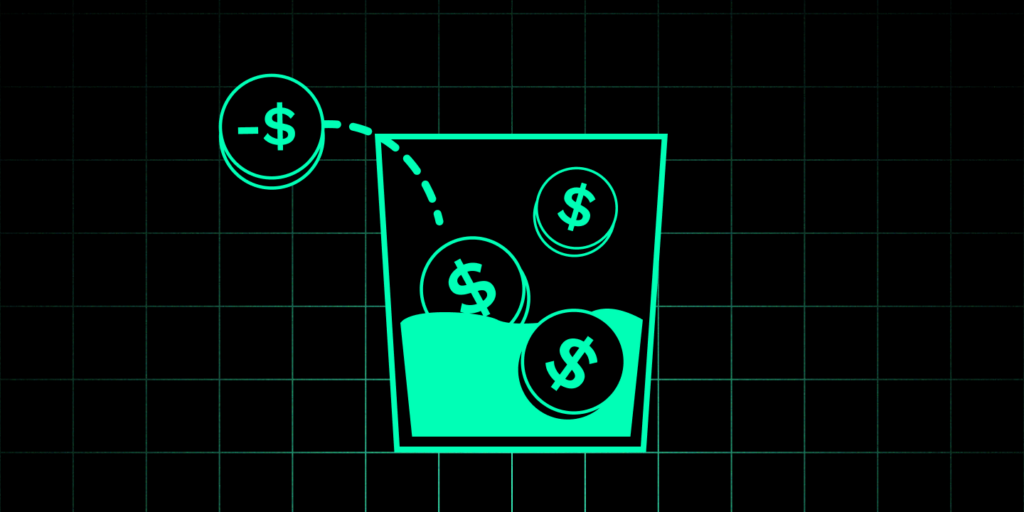
Price impact is one of the most important concepts to understand before making a swap on a decentralized exchange. It explains why the price you see before a trade may not equal the average price you receive once the trade is executed.
What Is Price Impact?
Price impact is the difference between the current market price of a token and the average execution price of your trade.
It happens because your trade consumes available liquidity. As you buy more of a token from a liquidity pool, the pool has less of that token available. The price of each additional unit usually becomes more expensive. As you sell more of a token into a pool, the pool receives more of that token and the price usually moves down.
In simple terms:
Price impact = how much your own trade moves the price.
For example, imagine a token is shown at $1.00 before your swap. If your trade is small and the pool has deep liquidity, you may receive an average execution price close to $1.00. But if your trade is large relative to the pool, your average execution price may become $1.03. That 3% difference is the price impact.
Why Price Impact Happens in DeFi
Price impact is common in DeFi because many decentralized exchanges use automated market makers, also known as AMMs.
Unlike a centralized exchange that matches buyers and sellers through an order book, an AMM lets users trade against liquidity pools. These pools hold two or more tokens. Prices are determined by a formula based on the token balance inside the pool.
When you trade against an AMM pool, you change the balance of that pool. If you swap ETH for USDC, you add ETH into the pool and remove USDC from it. Because the pool now has more ETH and less USDC, the relative price changes.
The smaller the pool, the more sensitive it is to each trade. A $10,000 swap may have almost no price impact in a pool with $100 million in liquidity. The same $10,000 swap may create major price impact in a pool with only $50,000 in liquidity.
Price Impact vs Slippage
Price impact and slippage are often confused because both affect your final swap output. However, they are not the same.
Price impact comes from your own trade size relative to available liquidity.
Slippage comes from price movement between quote time and execution time.
Two concepts are separated clearly: slippage happens because of market factors external to the trader, while price impact happens because of trade size relative to available liquidity.
| Concept | Main Cause | When It Happens | Example |
|---|---|---|---|
| Price impact | Your trade size compared to liquidity | During the trade calculation | A large swap pushes the AMM price curve |
| Slippage | Market movement before execution | Between quote and settlement | Another trade changes the pool before your transaction confirms |
| Gas fee | Network cost | When transaction is processed | Higher demand on the chain raises transaction cost |
| Trading fee | DEX or pool fee | During swap execution | A pool charges 0.05% or 0.3% on the swap |
A trade can have both price impact and slippage. For example, a large swap in a low-liquidity pool may already have 4% price impact at quote time. If the pool changes before the transaction settles, the final output may become even worse because of slippage.
Price Impact in AMMs vs Order Books
Price impact behaves differently depending on the trading system.
In an AMM, price impact is usually visible and continuous. Every trade changes the pool balance and moves the price along the curve. This is why AMM price impact can be more noticeable for low-liquidity pairs, volatile tokens and large swaps.
In an order book, traders interact with buy and sell orders at different price levels. A market order can still create price impact if it consumes multiple price levels. However, a limit order can avoid immediate price impact because it only executes at the chosen price or better.
AMM price impact tends to be more pronounced than order book price impact because AMM trades move along a pool price curve. It also explains that limit orders can sidestep conventional price impact when they are executed only at the user’s chosen price.
| Trading Method | How Price Impact Works | Best For |
|---|---|---|
| AMM swap | Trade moves along the pool curve | Fast swaps and liquid token pairs |
| Order book market order | Trade consumes available orders | Assets with deep order books |
| Limit order | Executes only at target price or better | Traders who want price control |
| DEX aggregator | Splits and routes across sources | Reducing price impact and improving execution |
What Causes High Price Impact?
Several factors can increase price impact.
The first is large trade size. The bigger your swap is compared to pool liquidity, the more it can move the price.
The second is low liquidity. Thin pools do not have enough assets to absorb large trades efficiently. This is common with new tokens, meme coins, long-tail assets and inactive pools.
The third is fragmented liquidity. A token may have liquidity spread across multiple DEXs, pools and chains. If you trade through only one pool, you may miss better liquidity elsewhere.
The fourth is volatile market conditions. When prices move quickly, liquidity can shift and market makers may update quotes. This can make the difference between expected output and final output more noticeable.
The fifth is poor routing. If a trade uses only one liquidity source when better routes exist, the swap may suffer more price impact than necessary.
How to Reduce Price Impact
You cannot remove price impact from every market swap, but you can reduce it.
One way is to trade through deeper liquidity. Larger pools can usually absorb bigger trades with less movement.
Another way is to split large trades. Instead of pushing the full trade through one pool, a route can split the order across multiple pools. This helps avoid putting too much pressure on one liquidity source.
You can also use a DEX aggregator. Aggregators scan multiple liquidity sources and search for more efficient routes. This is especially useful when liquidity is fragmented across different DEXs.
For traders who do not need instant execution, limit orders can also help. A limit order lets you define your preferred price and wait for execution when the market reaches that level.
How KyberSwap Helps Minimize Price Impact
KyberSwap is built to help users receive better swap outcomes by connecting fragmented DeFi liquidity into one trading experience.
KyberSwap Aggregator scans liquidity across decentralized exchanges and chains, then splits and reroutes trades through capital-efficient sources. The Aggregator is connected to over 420+ liquidity sources across 17 chains and KyberSwap solutions have facilitated over $100B in transactions for more than 2.6M users.
This matters for price impact because better routing can reduce dependence on a single pool. Instead of forcing the entire swap through one venue, KyberSwap Aggregator can search across multiple sources and find a route designed to improve output.
KyberSwap Aggregator also integrates different liquidity types, including AMMs, order book liquidity, Limit Orders and Professional Market Makers. By connecting onchain and offchain liquidity sources, KyberSwap can improve access to deeper liquidity and more efficient execution.
For users, this means a simpler swap flow. You enter the token you want to swap, KyberSwap searches for efficient routes and the transaction is executed through the selected path.
For developers, the KyberSwap Aggregator API gives projects a way to integrate best-rate swap routing into wallets, dApps and DeFi products through API access. This helps applications offer better swap execution without building routing infrastructure from scratch.
Price Impact for Liquidity Providers
Price impact is not only important for traders. It also matters for liquidity providers.
When a pool has high price impact, it may signal that liquidity is thin. Thin liquidity can attract trading fees but it can also expose LPs to sharper price movements and more volatile pool balances.
For LPs, understanding price impact helps answer important questions:
| Question | Why It Matters |
|---|---|
| Is this pool deep enough for active trading? | Deeper pools can support larger trades |
| Are traders avoiding this pool due to poor execution? | High price impact can reduce volume |
| Is liquidity concentrated in the right range? | Better liquidity placement can improve capital efficiency |
| Is the token too volatile for my risk profile? | Volatility can increase pool imbalance |
A pool with better liquidity depth can offer traders better execution. Better execution can attract more volume. More volume can increase fee opportunities for liquidity providers.
Why Price Impact Matters
Price impact matters because it affects real trade outcomes.
A low price impact trade usually means the market can absorb your swap efficiently. A high price impact trade means your own order is moving the price against you.
For small trades in deep markets, price impact may be minor. For large trades, new tokens and thin liquidity pools, price impact can become one of the biggest costs of trading.
This is why experienced DeFi traders do not only ask, “What is the token price?” They also ask:
How much will I actually receive after execution?
That question is the key to better onchain trading.
FAQ: Price Impact in DeFi
What is price impact in crypto?
Price impact is the change in a token’s price caused by your own trade. It happens when your swap size is large compared to the available liquidity in the market or pool.
Is price impact the same as slippage?
No. Price impact comes from your trade moving the market. Slippage comes from price changes between the time you receive a quote and the time your transaction executes.
Is high price impact bad?
High price impact usually means you are receiving a worse average execution price. It is not always dangerous but it can make a trade much more expensive than expected.
How much price impact is acceptable?
It depends on the token, trade size and market conditions. For liquid pairs, traders usually expect low price impact. For volatile or low-liquidity tokens, higher price impact may be unavoidable.
How can I reduce price impact?
You can reduce price impact by using deeper liquidity, splitting large trades, using a DEX aggregator or placing a limit order instead of executing an instant market swap.
Why do low-liquidity tokens have higher price impact?
Low-liquidity pools have fewer assets available for trading. When you make a swap, your trade changes the pool balance more aggressively, which moves the price further.
How does KyberSwap help with price impact?
KyberSwap Aggregator scans and routes across multiple liquidity sources to find more efficient swap paths. Smart Settlement adds execution-time pool comparison so trades can adapt when market conditions change before settlement.
Can limit orders avoid price impact?
Limit orders can help avoid conventional market swap price impact because they only execute at your selected price or better. However, execution is not guaranteed because the market must reach your target price.
Final Thoughts
Price impact is one of the core costs of DeFi trading. It shows how much your own trade changes the market price and explains why large swaps can receive worse average prices than expected.
The best way to manage price impact is to understand liquidity. Deeper liquidity, better routing and smarter execution can all help improve the final result.
KyberSwap helps users manage this through KyberSwap Aggregator, which scans and routes across 420+ liquidity sources across 17 chains, and through Smart Settlement, which adds execution-time intelligence to help users receive better swap outcomes.
In DeFi, the best trade is not only the trade with the best quote. It is the trade that gives you the best final output when the transaction settles.